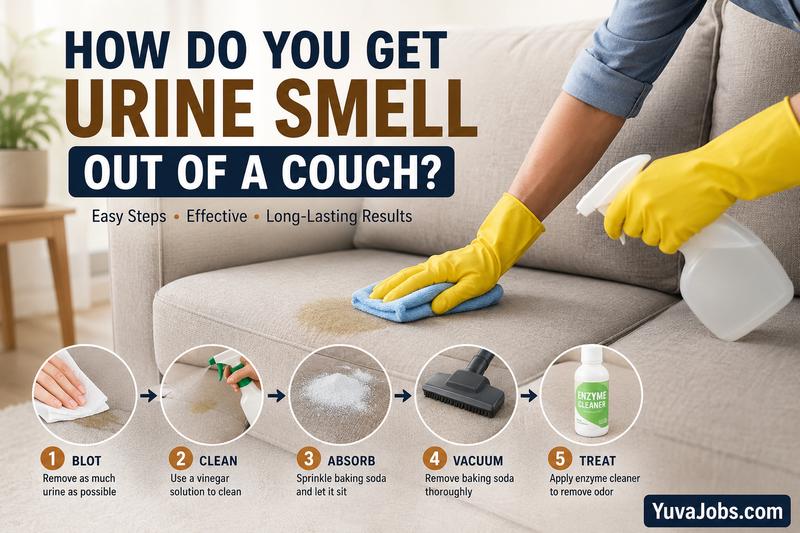

Remove urine smell from a couch with the right cleaning order, fabric-safe methods, and odor-neutralizing steps that actually stop the smell from returning.
The smell usually gets worse after the room warms up. That is the part people don’t expect. A couch can seem clean in the morning, then suddenly smell sharp and sour by evening because urine crystals buried inside the cushion react to heat and humidity. And once that happens, spraying perfume or fabric freshener on top only masks it for a few hours.
If you need to know how do you get urine smell out of a couch, the process matters more than the cleaning product itself. Done properly, you can remove both the stain and the odor without damaging the fabric or trapping moisture inside the cushion. This guide walks through the exact order that works, including what to do for old urine smells, pet accidents, removable cushion covers, memory foam inserts, and delicate upholstery fabrics.
Before you start
Start by figuring out what type of couch you have. Look for the upholstery cleaning code tag, usually tucked under a cushion or on the underside of the sofa. “W” means water-based cleaners are safe. “S” means solvent-only cleaners. “WS” allows either. And “X” means vacuum only — no liquids at all unless handled professionally.
You will need:
| Item | Why You Need It |
|---|---|
| Paper towels or clean cloths | To absorb fresh urine before it spreads deeper |
| White vinegar | Helps break down odor-causing compounds |
| Baking soda | Pulls odor and moisture from fabric |
| Spray bottle | Applies cleaning solution evenly |
| Wet/dry vacuum or towels | Removes excess liquid after cleaning |
| Enzyme cleaner | Breaks down urine proteins fully |
But do not mix vinegar and enzyme cleaner together in the same step. People do this all the time, and it weakens the enzyme action. The cleaning stages need separation so each one can do its job properly.
If the urine has soaked into foam cushions, expect the process to take longer than a surface cleanup. Realistically, deep odors sometimes need two treatment rounds before the smell disappears fully.
Step-by-step instructions
1. Blot the urine immediately
Press paper towels or dry cloths firmly into the wet area. Do not rub. Rubbing pushes liquid farther into the fibers and spreads the stain outward. Stand on folded towels if needed to apply pressure, especially on thick cushions.
And keep changing towels until they come away only slightly damp. Most people stop too early, leaving hidden moisture underneath.
2. Remove cushion covers if possible
If your couch has removable covers, unzip them and separate them from the foam insert. This gives you a better chance of reaching trapped urine inside. Washable covers should be cleaned according to the care label, but avoid high heat drying because heat can lock odors into fabric permanently.
For foam inserts, place them upright near airflow instead of laying them flat on the floor. Air circulation matters more than people think during odor removal.
3. Apply a vinegar cleaning solution
Mix equal parts white vinegar and cool water in a spray bottle. Lightly spray the affected area until damp but not soaked. The vinegar helps neutralize ammonia compounds that create the urine smell.
Let the solution sit for about 10 minutes.
Then blot again with dry towels to remove as much moisture as possible. A wet/dry vacuum works better here because it pulls liquid out from below the surface instead of just pressing it deeper.
So if you have access to one, use it.
4. Use baking soda to pull out remaining odor
Cover the damp area with a thick layer of baking soda. Not a light dusting — a proper coating. The baking soda absorbs lingering moisture and helps pull odor molecules from the upholstery.
Leave it untouched for at least 8 hours. Overnight is usually best.
People often vacuum it too early because the couch “looks dry.” That is one of the main reasons the smell comes back a day later.
5. Vacuum thoroughly
Use a vacuum attachment to remove all baking soda residue from seams, corners, and fabric texture. Any leftover powder can clump once humidity rises.
If the odor is already gone at this stage, you may not need enzyme cleaner. But older stains or pet urine usually require one more step.
6. Apply an enzyme cleaner for lingering smells
Enzyme cleaners work differently from household sprays. They break down the proteins and uric acid crystals that cause recurring odor. That is why standard cleaners sometimes fail even when the couch looks clean.
Spray the enzyme cleaner generously according to label instructions. Some products require the fabric to stay damp for several hours to work properly. Others dry faster.
Read the directions carefully because different brands vary more than people expect.
And avoid using hot air or hair dryers during this stage. Heat can stop enzyme activity before it finishes breaking down the urine compounds.
7. Dry the couch completely
Open windows, use fans, or run a dehumidifier nearby. Complete drying matters because trapped moisture can create mildew smells that people mistake for leftover urine.
A slightly damp couch may smell fine initially, then develop a sour odor two days later. That usually means moisture remained inside the foam.
If possible, stand cushions vertically near moving air for faster drying.
Common mistakes
One of the biggest mistakes is oversaturating the couch with cleaning liquid. More cleaner does not mean better odor removal. Too much moisture pushes urine deeper into foam padding where it becomes harder to dry completely.
Another problem is using steam cleaners too early. Steam heat can permanently set urine proteins into fabric — especially pet urine. The truth is, many people accidentally make the smell stronger while trying to sanitize the couch.
Or they spray air freshener directly over the spot and assume the problem is solved. It rarely works for more than a few hours because the odor source remains underneath.
Skipping enzyme cleaner is another common failure point. Vinegar helps neutralize smell temporarily, but old urine deposits often contain crystals that keep reactivating with humidity. Enzyme treatment handles that deeper layer.
And there is one more issue people overlook: not checking inside the cushion insert itself. Sometimes the cover smells clean while the foam underneath still holds odor. This happens often with pet accidents because liquid travels downward quickly.
If the couch still smells strongly after two full treatments, the urine may have reached the wooden frame beneath the cushions. At that point, partial disassembly or professional upholstery cleaning may be necessary.
Tips to do it better
Cold water works better than warm water for urine cleanup. Warm water can spread proteins deeper into upholstery fibers before they are neutralized.
And blacklight flashlights can help locate dried urine spots that are otherwise invisible — especially on darker couches or older stains. This is surprisingly useful when the smell exists but the exact source does not.
For pet urine, choose an enzyme cleaner specifically labeled for pets rather than a general fabric deodorizer. Pet urine contains stronger compounds and tends to penetrate deeper into cushions.
Place a fan low to the ground pointing across the couch instead of directly at it. Side airflow dries upholstery more evenly and reduces the chance of damp pockets forming inside foam.
Here’s the thing: sometimes the smell seems gone until the couch warms up again the next day. Wait at least 24 hours before deciding whether another treatment is needed.
If you are dealing with delicate materials like velvet, silk blends, or antique upholstery, test every cleaner on a hidden area first (even products labeled fabric-safe can alter texture or color slightly).
Closing
Getting urine smell out of a couch is mostly about sequence and patience. Blot first, clean carefully, absorb moisture fully, then break down what remains deep inside the fabric. Rushing the drying stage or skipping enzyme treatment is usually what causes the odor to return.
Start with the affected cushion today, give it a full overnight treatment, and reassess once everything is completely dry. Most couches can be saved if the odor source is handled properly before it settles permanently into the padding.