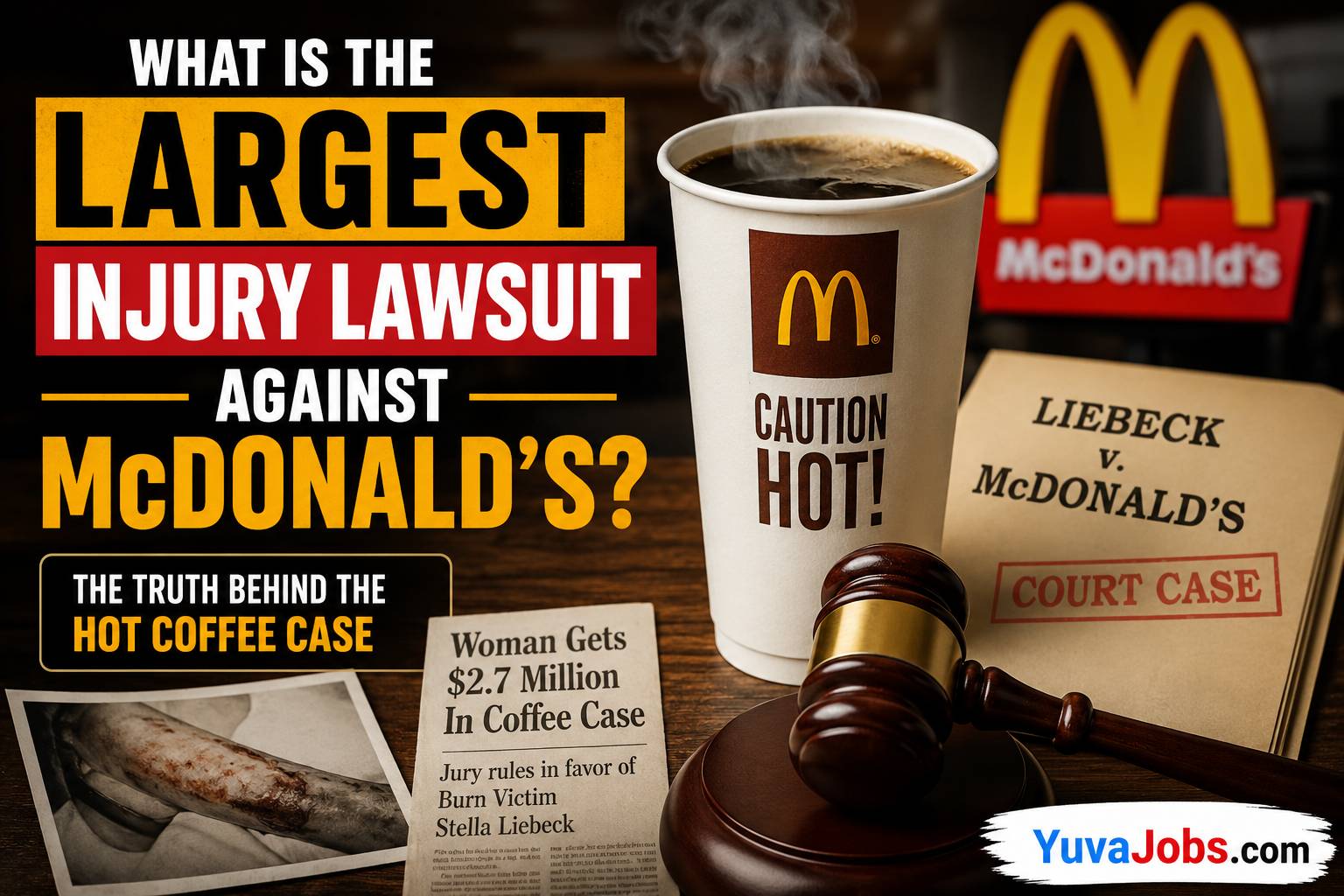
A single lawsuit can reshape how an entire company handles customer safety. That is exactly why what is the largest injury lawsuit against McDonald’s remains one of the most searched legal questions years after the verdict. Many people remember the headlines but not the actual facts, while others assume the case was simply about someone spilling coffee.
This guide explains what really happened, why the lawsuit became historic, how the damages were calculated, and what lessons consumers and businesses can take from it. By the end, you’ll understand the largest injury lawsuit involving McDonald’s, the legal reasoning behind the award, and the misconceptions that continue to circulate online.
Before You Start
Before reading further, keep one thing in mind: news headlines often simplify legal cases. Large jury awards are frequently reduced, appealed, or settled after the original verdict. That means the biggest number reported in the media is not always the amount ultimately paid.
The discussion below focuses on publicly documented court records and widely accepted legal facts. (Some online articles confuse the original jury verdict with the final settlement.) And that distinction matters because understanding how civil lawsuits work helps explain why this particular McDonald’s case became famous around the world.
Another point worth remembering is that injury lawsuits vary by state because civil liability laws, damage caps, and appeal procedures are different across jurisdictions.
Step-by-Step: Understanding the Largest Injury Lawsuit Against McDonald’s
1. Start with the correct case
The lawsuit almost everyone refers to is the Liebeck v. McDonald’s Restaurants case from 1994.
An elderly woman, Stella Liebeck, purchased coffee from a McDonald’s drive-thru in Albuquerque, New Mexico. While attempting to add cream and sugar, she accidentally spilled the coffee onto herself. The liquid caused severe third-degree burns requiring hospitalization, skin grafts, and months of medical treatment.
Understanding these injuries is essential because the lawsuit was never based on a minor burn.
2. Understand why McDonald’s was sued
The legal issue was not simply that coffee was hot.
Evidence presented during trial showed McDonald’s served its coffee at approximately 180°F to 190°F (82°C to 88°C). Experts testified that liquids at these temperatures could cause third-degree burns in just a few seconds.
The plaintiff argued that McDonald’s knowingly served coffee at temperatures significantly hotter than many consumers expected and had received hundreds of previous burn complaints.
And this history became a major factor in the jury’s decision.
3. Know what the jury actually awarded
The jury awarded damages in two parts.
First came compensatory damages for medical expenses, pain, and suffering. These initially totaled $200,000, although the amount was reduced because the jury found Stella Liebeck partially responsible for the accident.
Second came punitive damages intended to punish McDonald’s for its conduct.
The punitive damages totaled $2.7 million, roughly equal to about two days of McDonald’s coffee sales at that time.
This produced one of the most talked-about product liability verdicts in American legal history.
4. Learn what happened after the verdict
Many people stop reading the story after seeing “$2.7 million.”
But that’s only part of what happened.
The trial judge reduced the punitive damages to approximately $480,000, bringing the total judgment to roughly $640,000 before additional legal proceedings.
Later, both sides reached a confidential settlement before the appeal process concluded.
Because the settlement amount was never publicly disclosed, no one outside the parties knows the exact final payment.
Here’s the thing—the original verdict became famous, but it was not the amount ultimately received.
5. Understand why the case became so controversial
Public opinion quickly divided.
Many believed the lawsuit represented excessive litigation. Others argued it highlighted legitimate corporate responsibility because evidence showed McDonald’s had received hundreds of prior complaints regarding excessively hot coffee.
The truth is that many summaries left out important medical details. Photographs shown during trial documented catastrophic burns rather than minor discomfort, changing how many people viewed the case once they examined the evidence.
6. Compare it with later McDonald’s lawsuits
Although McDonald’s has faced many lawsuits involving slip-and-fall injuries, food safety claims, employment disputes, and accidents, the Stella Liebeck coffee case remains the company’s most famous injury lawsuit because of its enormous punitive damage award and lasting public attention.
Some later claims involved higher settlement speculation online, but publicly verified court records generally continue to identify the Liebeck verdict as the landmark injury case against McDonald’s.
So when someone asks what the largest injury lawsuit against McDonald’s was, this is almost always the case being referenced.
Common Mistakes People Make When Researching This Case
One frequent mistake is assuming Stella Liebeck received the full $2.9 million reported in many headlines. That number combined compensatory and punitive damages before judicial reduction and settlement. The final confidential settlement has never been publicly confirmed.
Another misunderstanding involves the injuries themselves. Internet discussions sometimes describe the burns as minor. Court evidence showed extensive third-degree burns requiring hospitalization and skin grafts, making the injuries much more severe than many people realize.
But another common error is believing the lawsuit claimed coffee should never be hot. The plaintiff instead argued that McDonald’s served coffee at temperatures that created an unreasonable risk of catastrophic burns.
Some readers also overlook the evidence regarding previous complaints. The jury heard testimony suggesting McDonald’s had received hundreds of earlier reports involving burn injuries. Whether someone agrees with the verdict or not, those prior incidents influenced how the jury evaluated corporate responsibility.
Realistically, understanding any famous lawsuit requires reading beyond headlines because legal decisions often involve evidence that short news reports simply cannot fully explain.
Tips to Better Understand High-Profile Injury Lawsuits
Whenever you read about a major verdict, separate the jury award, the judge’s final ruling, and the actual settlement. These can be three very different numbers.
Look beyond viral social media posts and examine whether reliable legal records explain the evidence presented during trial. A dramatic headline rarely tells the entire story.
And remember that punitive damages exist for a different purpose than compensation. Medical bills reimburse losses, while punitive damages are designed to discourage particularly harmful conduct.
One final suggestion: pay attention to the jurisdiction. (Civil law differs significantly from one state to another.) Damage calculations, negligence standards, and appeal procedures can all affect the final outcome of an injury lawsuit.
Closing
The largest injury lawsuit commonly associated with McDonald’s remains the Liebeck v. McDonald’s Restaurants hot coffee case. While many people remember only the headline figure, the complete story includes severe injuries, extensive evidence presented during trial, reduced damages, and a confidential settlement that followed.
If you’re researching famous legal cases, the next step is to compare the original court verdict with the final judgment and any later settlement. Doing so provides a much clearer picture than headlines alone and helps separate legal fact from popular myth.
