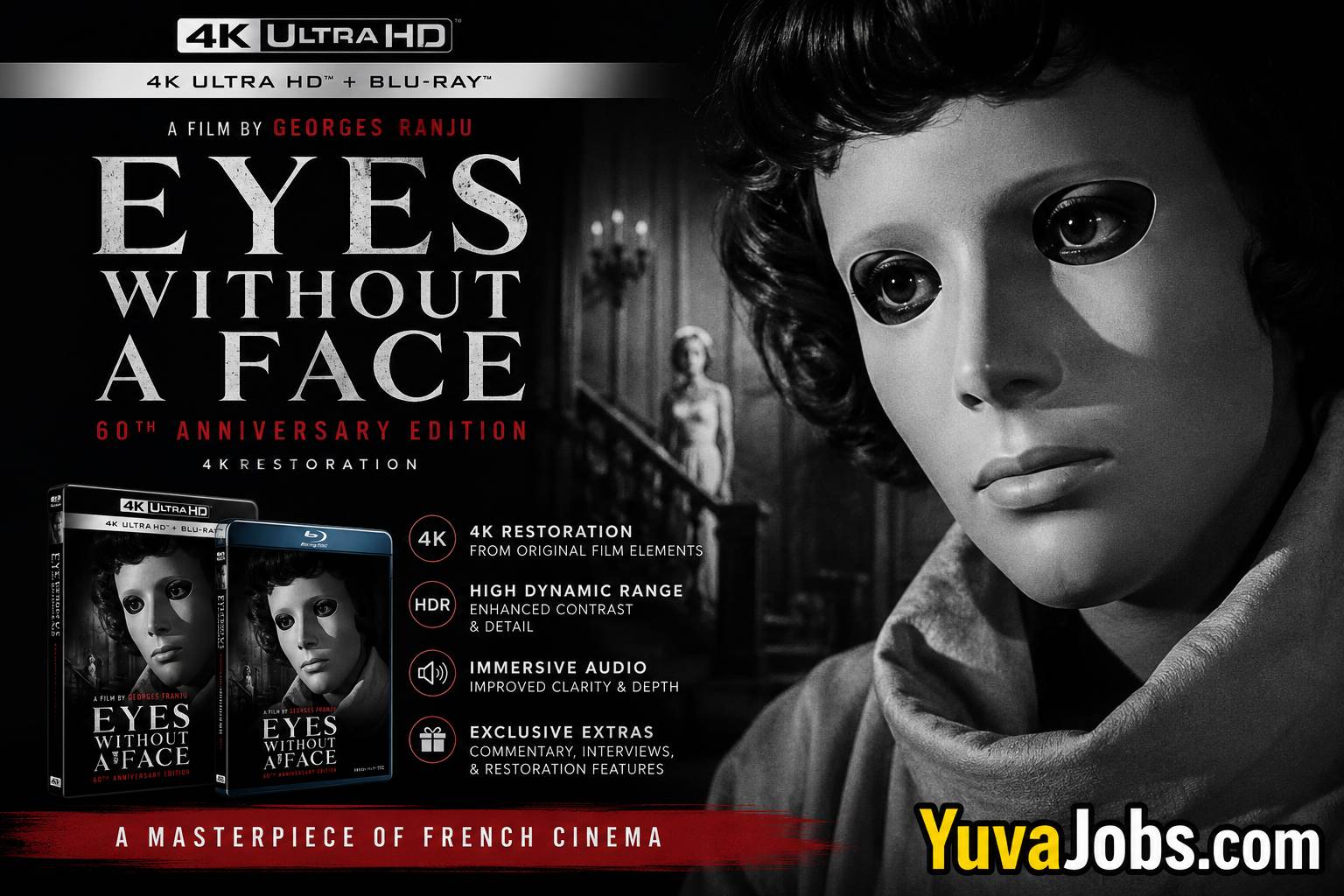
Every generation discovers a few classic films that feel surprisingly modern despite their age. Eyes Without a Face belongs in that category. Instead of relying on loud scares, it creates tension through silence, elegant black-and-white photography, and unsettling emotional performances. The recent eyes without a face [4k ultra hd blu-ray] release gives viewers an opportunity to see those artistic choices with greater clarity while remaining faithful to the original theatrical presentation.
And that balance matters because restoration should reveal what audiences were meant to see—not reinvent the film.
Background and Context
Released in 1960 and directed by French filmmaker Georges Franju, Eyes Without a Face blends psychological horror, tragedy, and poetic storytelling. The film follows a brilliant surgeon whose desperate attempts to restore his daughter’s face lead to disturbing ethical decisions. Its influence stretches across decades, inspiring filmmakers in both European art cinema and modern horror.
The new 4K restoration (created from high-quality film elements) emphasizes the original monochrome cinematography rather than artificially sharpening or altering it. Fine textures, film grain, and carefully composed lighting become easier to appreciate, especially on modern HDR-capable televisions.
But viewers should remember that this remains a sixty-year-old production. A faithful restoration preserves natural imperfections instead of removing every sign of the film’s age, which is exactly what many collectors prefer.
Why the 4K Ultra HD Blu-ray Matters
Picture quality is the biggest reason collectors consider upgrading. Earlier DVD and standard Blu-ray editions often softened detail or compressed shadow areas, reducing the impact of the film’s haunting visual style. The 4K Ultra HD presentation restores subtle contrast, cleaner grayscale transitions, and more visible texture throughout many scenes.
Audio improvements are equally meaningful—even though this is not an action film. Dialogue remains clear, Maurice Jarre’s memorable musical score gains additional depth, and ambient sounds contribute more naturally to the unsettling atmosphere.
Many premium editions also include valuable supplements such as:
- Audio commentaries discussing Georges Franju’s filmmaking techniques.
- Interviews with film historians exploring the movie’s lasting cultural influence.
- Restoration demonstrations showing how damaged film elements were repaired.
- Booklets featuring essays that place the film within the history of French cinema.
So collectors receive far more than improved resolution. They gain historical context that enriches the viewing experience.
Here’s the thing—the truth is that Eyes Without a Face rewards patient viewers. Its emotional restraint, elegant pacing, and visual storytelling often become even more impressive with repeated viewings, particularly when presented in a carefully restored format.
Practical Buying Advice
Not every viewer needs the 4K edition. If you primarily watch films on a smaller display or do not own a 4K player, a quality Blu-ray may still provide an excellent experience.
However, collectors, classic cinema enthusiasts, and horror fans who appreciate film preservation will likely find the upgrade worthwhile. The enhanced presentation allows details hidden in previous releases to become more noticeable without sacrificing the original artistic intent.
And buyers should compare included bonus features before purchasing because different publishers occasionally release region-specific editions with exclusive content.
One honest limitation deserves mentioning. While 4K restoration dramatically improves visual fidelity, it cannot change the pacing or filmmaking style of a 1960 French psychological horror film. Anyone expecting modern jump scares or fast editing may find the experience quieter than anticipated.
The lasting appeal of eyes without a face [4k ultra hd blu-ray] comes from respect for cinema history. Rather than simply increasing resolution, the release preserves one of horror’s most influential films in a form that reflects its original craftsmanship. For anyone interested in classic European cinema, film restoration, or the evolution of psychological horror, this edition offers a rewarding way to experience a landmark work that continues to inspire filmmakers more than six decades after its original release
